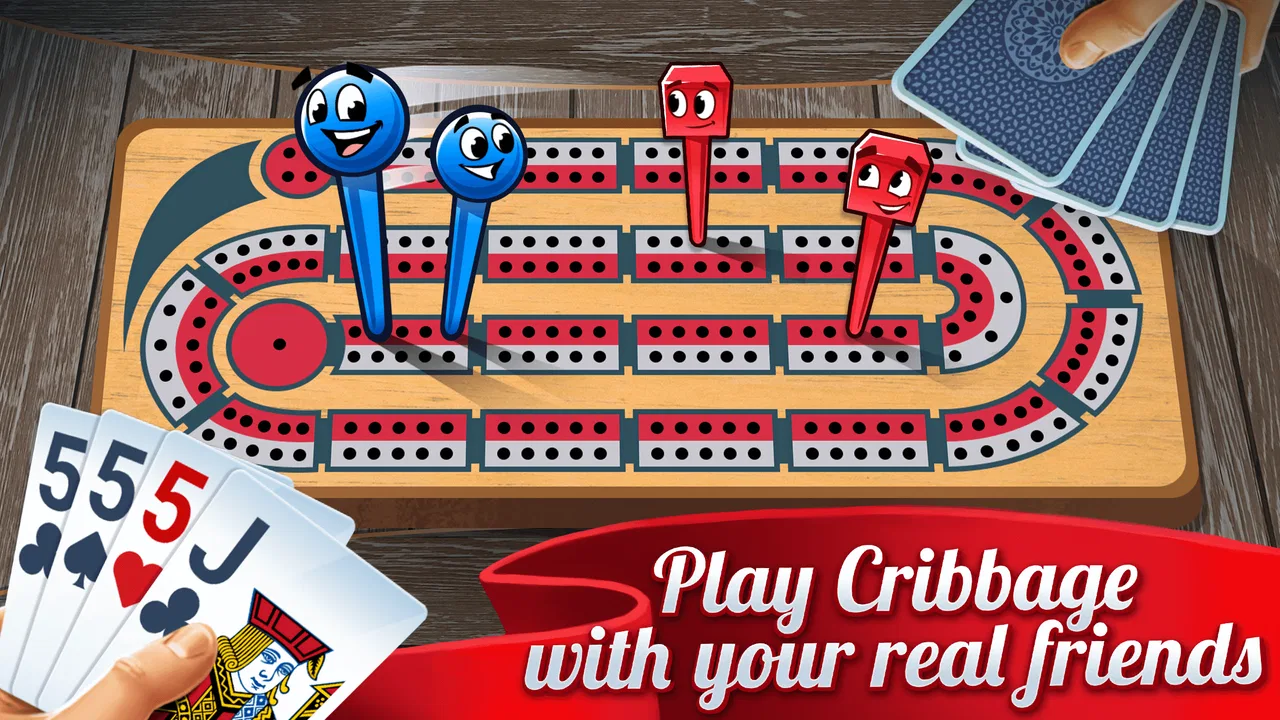
Ultimate Cribbage: Card Board
- 4.4
- Rating
- 1.00M
- Installs
- Free
- Price

 Analysis by App-foxy
I found Ultimate Cribbage: Card Board most enjoyable when I treated it as a small, dependable card table rather than a game I had to study for hours. It is a free cribbage game from WildCard Games, designed for Android and aimed at players who want to score hands, make quick decisions, and return to a familiar ruleset whenever they have a few quiet minutes. The presentation is straightforward, which suits the game: the cards and scoring are the focus, not a long story or a crowded collection of side activities.
That simplicity also makes it a practical choice for a shared household device. One person can play a short session, hand the phone or tablet to someone else, and avoid turning the game into a complicated setup project. I would still treat it as a personal game rather than a true family account system, because the important question is not whether several people can physically use the same device, but whether each person is comfortable sharing the same play space and any progress associated with it.
How Ultimate Cribbage: Card Board fits into everyday play
I find this game easiest to enjoy when I make room for one complete hand instead of trying to squeeze in a rushed move between other tasks. In this section, I’ll look at how its turn-by-turn pace can suit a shared device, and why a little agreement about turns makes the experience smoother. That everyday rhythm also sets up a closer look at the game’s visual and audio mood.
You May Also Like

 Blood Strike: 2.5 Anniversary
Blood Strike’s Loadouts Turn Every Drop Into a Tactical Gamble
A close look at Blood Strike’s custom loadouts: how fast access to signature weapons reshapes its battle royale rhythm, rewards preparation, and narrows the gap between fights.

 Pandora - Music & Podcasts
Pandora’s Music Is Easy to Start, but Harder to Recover
Pandora’s strength is its low-effort path from a seed to a station. Its weak spot is how much confidence it asks you to place in connection, setup, and quiet recovery.

 8 Ball Pool
 Is Built on Rivalries, Rematches, and Routine
A close look at the rivalries, rematches, shared routines, and unanswered safety questions that turn a quick pool match into a persistent mobile community.

 Samsung Music
’s Quiet Strength Is Playing What You Already Own
Its reach comes less from spectacle than from dependable access to a personal library. That simplicity is both the app’s strongest retention engine and its ceiling.

 AccuWeather: Weather Radar
AccuWeather Review: A Quick, Clear Forecast for Everyday Decisions
For everyday plans, the best forecast is the one you can understand quickly. AccuWeather makes rain timing, radar, and local conditions easy to act on, with a few trade-offs.

 Hill Climb Racing
Why Hill Climb Racing Still Turns Crashes Into One More Run
A tiny car, a bumpy hill and one more upgrade: Hill Climb Racing keeps resurfacing because its simple chaos makes every near-miss feel personal.
More From Our News Desk



A good shared-device game for short turns
Cribbage works well in a household because it naturally breaks into decisions and scoring moments. A player can look at a hand, decide which cards belong in the crib, and continue without needing a large uninterrupted block of time. I can imagine using it during a quiet evening when one person is cooking and another is waiting nearby, or passing a tablet around after dinner for a few hands. It does not demand the same attention as a fast action game, so conversation can continue while someone thinks through a discard.
The best shared-use arrangement is one where players agree before starting who is taking the next turn and whether the device will remain on the table. That sounds obvious, but card games become frustrating when a phone is picked up for another task and the current hand is left in an uncertain state. I recommend finishing a hand before switching users whenever possible. This keeps the scoring easy to follow and avoids the common household problem of someone returning to a screen and forgetting whose decision is pending.
For a couple or a small group of relatives who already understand cribbage, the game can serve as a convenient substitute for carrying a physical board and deck. It is also less messy than a real table setup, especially in a living room where cards can be knocked over. On the other hand, it cannot replace the social feel of sitting across from another person with a physical board. If the main reason you enjoy cribbage is conversation, gestures, and handling the cards, the digital format will feel more functional than warm.
What the game expects from a new player
The central challenge is not learning how to tap a card. It is learning why a particular discard is valuable or dangerous. Cribbage rewards players who think about the hand they keep, the crib they give away, and the likely scoring opportunities created by the starter card. A beginner can play immediately, but understanding the consequences takes practice. I would not judge the game harshly for that; the same learning curve exists with a physical deck. Still, someone looking for a completely casual card game with no rules knowledge may need patience at the beginning.
My practical advice is to make the first sessions about recognizing patterns rather than chasing perfect choices. Look for pairs, runs, combinations that total fifteen, and hands that can benefit from a favorable starter. Then notice what happens when you place attractive cards into the crib. This approach turns each hand into a small lesson without requiring a separate tutorial routine. It is especially useful on a shared device, because an experienced player can explain a decision aloud while a newer player watches.
The most useful habit is to separate a good-looking hand from a good discard. A hand with several cards that work together may still be weakened by keeping the wrong combination, while a less exciting group can preserve flexibility. I found that thinking one step ahead made the game more satisfying than simply selecting the cards with the highest immediate score.
Keeping household sessions organized
Because this is a game rather than a household management tool, I would set expectations outside the app. Decide whether the device belongs to one main player or whether everyone is taking turns. If several people use the same phone, avoid changing unrelated settings or leaving the game in a half-finished hand. If the device is used by children as well as adults, explain that the game is about turn-taking and counting, not about tapping quickly or guessing randomly.
There is also a useful distinction between sharing a screen and sharing an identity. A family may pass around the same tablet, but that does not automatically mean each person has a separate record of play. I would not use one shared installation as a substitute for individual profiles or carefully separated accounts. If personal progress matters to you, check how the game behaves on your device before making the household arrangement permanent, and keep the main player’s expectations modest.
This matters most when a child borrows an adult’s device. A young player may press buttons without understanding what a purchase prompt means, while an adult may assume the game is being used only for a quick hand. The content rating is Everyone, which makes the game broadly suitable by age context, but age suitability does not remove the need for ordinary supervision around a shared device and spending decisions.
Setup, compatibility, and the cost boundary
Getting started is relatively approachable for Android users. The game requires Android 8.0 or later, so owners of older phones should check the operating system before planning to use it on a spare household device. That requirement is worth considering if your family keeps an older tablet in the kitchen or living room for shared entertainment. A game that runs comfortably on the main phone may not be available on an aging backup device.
The title is free to install, which lowers the barrier for trying it with another member of the household. It does include in-app purchases ranging from $0.99 to $99.99 per item, so I would make the spending boundary clear before handing the device to someone else. The free entry point is useful, but “free” should not be interpreted as “there are no paid options.” On a shared device, the safest routine is to require the device owner’s approval for any purchase and to avoid treating an accidental tap as part of normal play.
I also prefer to install and test a game before introducing it to children or guests. That gives the owner a chance to see how the menus behave, whether the current turn is easy to identify, and whether the screen is comfortable to read. Ultimate Cribbage: Card Board is currently at version 2.9.6, and I would still check the experience on the exact phone or tablet that the household plans to use rather than assuming every screen will feel identical.
There is no reason to overcomplicate the setup. A stable internet routine, a charged device, and a clear agreement about turns are more important here than accessories. A physical cribbage board can remain nearby for players who want to compare scoring, but the digital game is easier when the goal is simply to start a hand without gathering pieces.
Coordination between experienced and new players
Cribbage is unusually good for informal coaching because decisions can be discussed before they are made. An experienced player can ask a beginner what they would put in the crib, then explain the trade-off without taking over the entire game. I recommend allowing the newer player to commit to a choice first. If the stronger player immediately announces the best move, the shared session becomes a demonstration instead of a game.
A helpful household rule is to give advice only before a card is selected, not after the result is known. Once the starter card appears or the opponent scores, hindsight makes every decision look obvious. Keeping the discussion in the moment teaches probability and judgment more honestly. It also prevents the session from becoming an argument about mistakes.
For mixed-skill groups, I would avoid turning every hand into a competition about perfect play. Let the beginner focus on spotting fifteens and runs while the experienced player thinks about crib value and defensive choices. This creates a natural progression: first understand how points are formed, then learn how to deny opportunities and manage the board position. The game has more depth than its simple card-table appearance suggests, but that depth is easier to enjoy when introduced gradually.
Another practical tip is to say the score aloud after important plays, even when the game displays it clearly. Verbal scoring helps a child or casual player connect the cards with the points they produce. It also gives everyone a shared reference when the device is passed around. In a household setting, that small habit reduces confusion more effectively than rushing through the interface.
Age, trust, and responsible use
The Everyone rating makes this a reasonable option for a broad age range, particularly for people who enjoy traditional card games and basic mental arithmetic. I can see it working for an older child who already knows how turns operate, an adult learning cribbage, or a grandparent who prefers a familiar game over a visually intense mobile title. The rating does not guarantee that every player will understand the rules immediately, so an adult may still need to explain the scoring and the idea of the crib.
Trust becomes more important when the same device is used by people with different levels of independence. A child may be perfectly capable of playing a hand but not ready to make decisions about purchases. A guest may know how to play but not know which buttons should be left alone. I would keep the device owner responsible for account and payment decisions, while letting the player control only the cards and turns.
This is also a game where honesty improves the experience. Players sharing one screen should agree not to touch another person’s cards or make a move while someone is away. If the device is placed face-up on a table, it is easy for a curious player to glance at information that would normally be private in a physical game. That may not matter in a relaxed family session, but it does matter if the group wants a fair contest.
I would skip this title for a household that needs strong separation between users, detailed child controls, or a clearly independent profile for every player. The game is better suited to cooperative sharing of a device than to a carefully managed multi-user environment. In that situation, a physical deck may actually be simpler, or a different digital card game with the account structure you need may be a better fit.
How it compares with a physical deck and other card apps
Compared with a physical cribbage set, the digital version wins on convenience. There are no loose cards to shuffle, no pegs to misplace, and no need to calculate every score manually. That makes it useful for travel, small tables, and moments when only one device is available. It also offers a consistent way to play when nobody in the room wants to organize the equipment.
The physical alternative remains stronger for teaching the culture of cribbage. Moving pegs, handling cards, and watching an opponent consider a discard all contribute to the experience. A real board also makes the score visible to everyone at once. If your household gathers specifically for a long, social card night, I would choose the physical set first and use the app as a practice companion between sessions.
Against lighter card games, this one asks more from the player. A quick matching game may be better for a young child who wants immediate feedback, while a solitaire-style app may suit someone who prefers a solitary pace with no shared decision-making. Ultimate Cribbage: Card Board is the better choice when the appeal is strategic hand selection and traditional scoring. It is not the right answer for someone who wants a constantly changing collection of unrelated games or a highly animated presentation.
The rating and install history suggest that the game has reached a substantial audience, with an average score of 4.4 from around 91 thousand ratings and more than a million installs. I see those figures as evidence that the basic concept works for many players, not as a promise that every household will love it. The experience depends heavily on whether you already enjoy cribbage, whether the interface feels comfortable on your device, and whether your shared-use expectations match a simple game format.
Who should try it, and who should pass
I would recommend it to someone who wants a focused cribbage experience on Android, especially if they value short sessions and do not need a large amount of decoration. It is a sensible first download for a player who knows the physical game and wants to practice without carrying a board. It can also help a family introduce cribbage to a new player, provided an experienced person is willing to explain the decisions instead of assuming the rules are self-evident.
I would be more cautious about recommending it to a player who expects a fully social online meeting place, extensive customization, or a detailed family-account structure. Those expectations go beyond what this straightforward card game is best at. Someone who dislikes counting combinations may also lose interest quickly, because the satisfaction comes from understanding why a hand scores and how a discard changes the odds.
For a shared household, I would begin with a short trial session involving two people. Agree on whose turn it is, keep purchases off the table unless the owner approves them, and see whether everyone can follow the cards and score. If the group enjoys discussing choices, the game has room to become a regular evening activity. If everyone prefers fast, visual entertainment, it will probably remain installed but unused.
My household verdict
Ultimate Cribbage: Card Board succeeds because it stays close to the reason people play cribbage in the first place: making a clever hand, managing the crib, and watching a modest decision produce a surprisingly good score. WildCard Games has kept the focus on the card table, which makes the game approachable for experienced players and manageable on a shared device.
My main reservation is not about the card game itself but about boundaries. A free installation with optional purchases needs an adult owner to remain responsible for spending, and a shared screen should not be mistaken for separate player accounts. The Everyone rating supports broad use, but household trust still depends on supervision, turn-taking, and honest play.
With those expectations in place, I think it is a worthwhile choice for Android users who want a traditional card game that can fit around ordinary life. I would use it for practice, quick evening hands, and relaxed coaching with a family member. I would choose a physical board for a special card night and another kind of app for players seeking lots of modes or stronger user separation. For its intended purpose, though, this is a focused, accessible cribbage table that works best when the household treats it as a shared game rather than a shared account.
FAQs for Ultimate Cribbage: Card Board
01What is Ultimate Cribbage: Card Board, and how is it played?
Ultimate Cribbage: Card Board is a digital version of the classic cribbage card game, combining traditional scoring with a visual board-game presentation. Players aim to reach the target score before their opponent by creating valuable card combinations, counting hands, and scoring during play. The app is designed for both newcomers learning the rules and experienced cribbage players looking for convenient matches.
02Can beginners learn how to play cribbage through the app?
Yes, the game is suitable for beginners, although new players may need a little time to understand pegging, crib scoring, pairs, runs, fifteens, and the role of the starter card. Its interactive format makes the turn order and scoring easier to follow than a physical game in many cases. Players unfamiliar with cribbage should still review the in-game instructions carefully before starting competitive matches.
03Does Ultimate Cribbage: Card Board support offline play?
Offline availability can depend on the specific game mode and the version installed on your Android or iOS device. Single-player matches against computer opponents are generally the most practical option when you do not have an internet connection, while online features may require connectivity. It is worth checking the app-store description and the game’s mode selection after installation, especially if offline access is important to you.
04Are there online multiplayer features or opponents controlled by the game?
Ultimate Cribbage: Card Board is primarily designed to let players enjoy cribbage in a convenient digital format, with computer-controlled opponents making it possible to play without waiting for another person. Depending on the current release, online or additional multiplayer options may be available, but these can change with updates. Check the latest listing and in-game menus to confirm which multiplayer modes are supported on your device.
05Is Ultimate Cribbage: Card Board free to download, and does it include advertisements or purchases?
The application may be available as a free download, but free access can include advertising, optional purchases, or limitations on certain features. These details can vary between Android and iOS versions and may also change after updates. Before downloading, review the store page for the current pricing, advertising information, permissions, and purchase options so you know what to expect during regular play.
Pros
- Clear scoring makes it easy to follow each hand.
- Several difficulty levels suit both beginners and experienced players.
- Short matches work well for quick breaks.
- Helpful hints can guide new players through tricky decisions.
- The board-style presentation feels familiar to traditional cribbage fans.
Cons
- Some advanced options may require extra time to unlock.
- The interface can feel dated on newer
- high-resolution screens.
- Computer opponents may become predictable after extended play.
- Ads can interrupt the flow unless removed through an in-app purchase.
- Players unfamiliar with cribbage may need an external rules explanation.

Ultimate Cribbage: Card Board
Gallery